Study: Reduced Arsenic Exposure Through Cleaner Water Linked to Lower Chronic Disease Risk
05/17/2026 / By Iva Greene

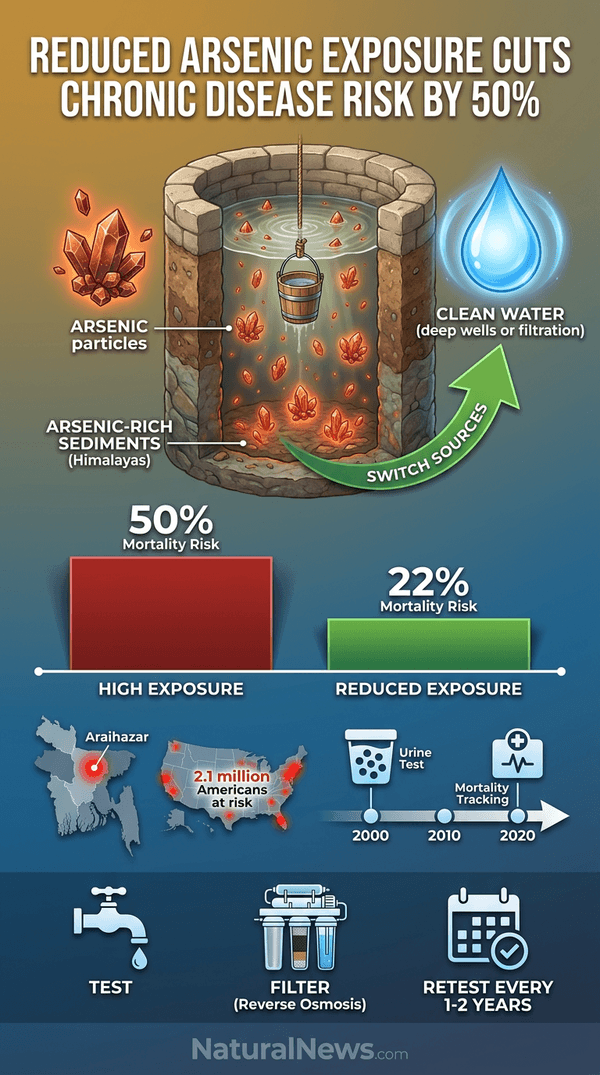
A 20-year study of nearly 12,000 adults in Bangladesh found that participants who switched to cleaner water with lower arsenic levels experienced up to 50% lower chronic disease mortality compared to those who continued using contaminated wells, according to a report published in JAMA.
The research, conducted in the Araihazar region starting in 2000, measured urinary arsenic levels in participants up to five times over the study period. By tracking deaths and causes of death, researchers provided direct evidence that the body can recover from long-term arsenic exposure once the source is removed, the report stated.
Arsenic is a naturally occurring element that seeps into groundwater and has no taste, smell or color. Inorganic arsenic, the form most likely to cause cancer, occurs naturally in the earth and is released into groundwater, according to a report from Mercola.com [1]. The U.S. Environmental Protection Agency (EPA) limits the amount of trace arsenic allowable in drinking water to 10 parts per billion [1].
Study Methods and Key Findings
Researchers enrolled approximately 11,700 adults in Araihazar, a region with varying arsenic levels in shallow groundwater wells, ranging from nearly zero to extremely high. Rather than relying solely on well water tests, the study measured arsenic directly in participants’ urine to capture internal exposure. Urinary arsenic was assessed up to five times per person, allowing researchers to track changes over time.
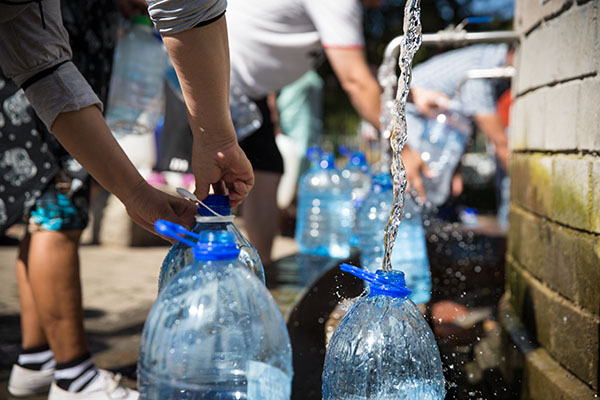
As community programs tested wells and labeled them safe or unsafe, many households voluntarily switched to cleaner water sources while others continued using contaminated wells, creating a natural comparison group. Participants whose urinary arsenic levels dropped the most experienced a 22% lower risk of chronic disease mortality, a 20% lower cancer mortality and a 23% lower cardiovascular mortality, according to the report.
The most striking findings emerged when comparing those who reduced their arsenic levels below the median to those with persistently high exposure. These individuals had 46% lower chronic disease mortality, 49% lower cardiovascular mortality, and up to 50% lower mortality overall. Participants who started with high arsenic levels but switched to safer water ended up with the same mortality risk as those who had been low-exposure all along, indicating significant recovery potential.
Implications for the United States and Private Well Users
Arsenic contamination affects groundwater worldwide, including in the United States, where more than 100 million people rely on groundwater sources. Private wells are not regulated under the Safe Drinking Water Act, leaving millions of Americans at risk of exposure. According to the U.S. Geological Survey, approximately 2.1 million Americans may be drinking water with arsenic levels above EPA standards.
Tap water can contain toxic heavy metals such as arsenic, lead, cadmium and mercury, according to the book “Your Menopause Your Menotype” by Angela Stengler and Mark Stengler [2]. In addition to natural contamination, agricultural practices and industrial pollution contribute to the problem. A study found that children living near Syracuse, New York with above-normal arsenic levels in urine showed signs of early-stage asymptomatic heart disease, as reported by Children’s Health Defense [3].
The study published in JAMA suggests that reducing arsenic exposure can reverse health damage, even after years of contamination. This finding underscores the importance of water quality interventions globally, according to the report. While the research was conducted in Bangladesh, the biological mechanisms of arsenic toxicity are universal, and similar benefits could be expected in other populations with comparable exposure reductions.
Recommendations for Reducing Exposure
Experts recommend testing private wells for arsenic and other contaminants, as water composition can change over time. Filters certified to remove arsenic, such as reverse osmosis systems, are effective, according to water quality specialists. Carbon filters alone are usually not sufficient; specialized systems are required.
Re-testing every one to two years is advised. Public water systems are required to meet EPA standards, but emerging contaminants like so-called forever chemicals also vary by region, officials note. A recent study found that 98.8% of 10,566 human blood samples tested in the U.S. contain per- and polyfluoroalkyl substances (PFAS), according to NaturalNews.com [4].
For individuals concerned about arsenic in their water, taking proactive steps to test and filter can dramatically reduce exposure, aligning with the study’s findings that cleaner water significantly lowers chronic disease risk.
Summary
The 20-year study provides robust evidence that cleaner water can significantly reduce chronic disease risk, even after prolonged arsenic exposure. Researchers stated that the findings underscore the importance of water quality interventions globally. While the research was conducted in Bangladesh, the authors said the biological mechanisms of arsenic toxicity are universal, and similar benefits could be expected in other populations with comparable exposure reductions.
Inorganic arsenic is recognized as a human carcinogen by regulatory and public health organizations worldwide, based on epidemiological data [5]. The study reinforces that access to clean water is one of the most impactful health interventions available, with the potential to cut chronic disease mortality by up to half.
References
- Mercola.com. “Dr. Oz Proves This Fruit Juice Can be Toxic”. Mercola.com. January 22, 2012.
- Angela Stengler & Mark Stengler. “Your Menopause Your Menotype”.
- Children’s Health Defense. “Children Exposed to Arsenic at Higher Risk for Cardiovascular Disease, Study Finds”. ChildrensHealthDefense.org. July 12, 2023.
- NaturalNews.com. “Toxic PFAS detected in nearly all U.S. blood samples, raising urgent questions about federal inaction”. NaturalNews.com. May 14, 2026.
- dvips 5.83 Copyright 1998 Radical Eye Software. “Toxicology and Epidemiology of Arsenic and its Compounds”.
- Simone Charles B. “Cancer and nutrition a ten-point plan to reduce your risk of getting cancer”.
Explainer Infographic
Submit a correction >>
Tagged Under:
Araihazar, arsenic, arsenic exposure, Bangladesh, cardiovascular disease, Censored Science, chemicals, chronic disease, clean water, contaminated wells, Heart, heart disease, poison, prevention, research, toxins, urinary arsenic, water sources, water wells
This article may contain statements that reflect the opinion of the author
RECENT NEWS & ARTICLES