How AI data centers are draining America’s water and power
06/15/2026 / By Jacob Thomas

- Edison Electric Institute (EEI) reports data centers could require up to 300 GW of power by 2030, though Schneider Electric’s estimates vary wildly from 16.5 to 65.3 GW, exposing deep uncertainty.
- Utilities are using inflated projections to justify rate hikes and infrastructure expansions, with EEI admitting the bias is toward corporate growth, not consumer needs.
- Central Texas data centers consumed 463 million gallons of water in 2023-24 and Texas data centers are projected to use 49 billion gallons in 2025 and 400 billion by 2030.
- Globally, data centers consumed 448 TWh of electricity and 4.5 trillion liters of water last year, with projections doubling to 945 TWh and 9.3 trillion liters by 2030.
- AI is physical infrastructure requiring land, water and energy and poor planning could collide with existing resource pressures unless responsible planning begins now.
The artificial intelligence revolution is not just transforming how we work and communicate, it is fundamentally rewriting America’s relationship with its most basic resources. While tech giants race to build the infrastructure for superintelligence, a quieter crisis is unfolding in communities across the country, where residents are being asked to make sacrifices for machines.
According to the Edison Electric Institute (EEI), data centers alone could require up to 300 gigawatts of power by 2030, a staggering leap from today’s 60 GW. McKinsey’s analysis projects a 20% annual increase in electricity consumption, a rate unseen since the industrial revolution. Yet these numbers remain deeply speculative. Schneider Electric’s estimates vary wildly, from 16.5 GW to 65.3 GW, exposing the uncertainty behind the industry’s projections.
Despite this volatility, utilities are charging ahead. “The longer-term bias for electric company growth is on the upside,” EEI’s report declares, a chilling admission that corporate profits, not consumer needs, are driving this gold rush. Rate hikes and infrastructure expansions are being justified using these inflated projections, leaving households to foot the bill.
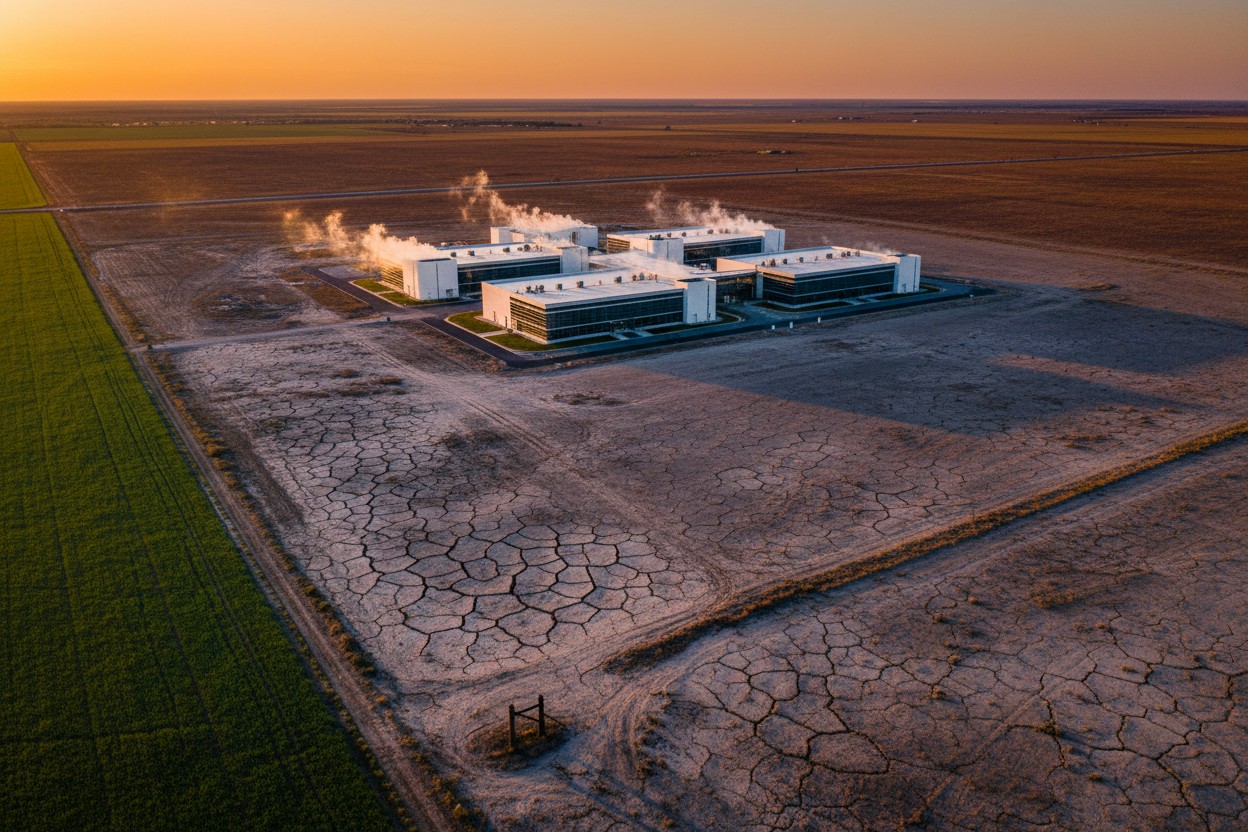
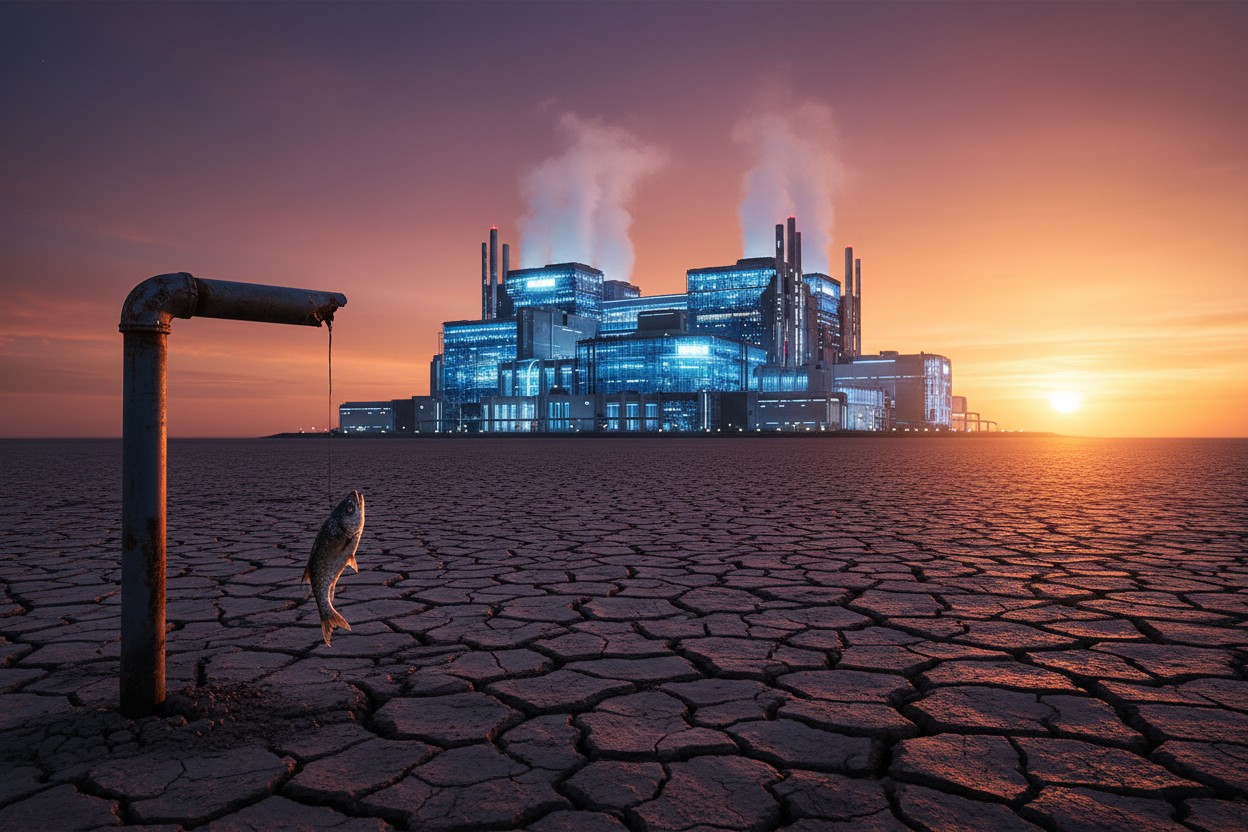
But electricity is only half the story. The water consumption required to cool AI data centers is reaching alarming levels. In Central Texas alone, data centers consumed 463 million gallons of water in 2023-24, enough for thousands of homes. As demand intensifies, residents are being told to adapt. Soon, you might be asked to shorten your showers, not flush the toilet and avoid watering your lawn. The AI data centers need the water for superintelligence and this will affect every aspect of daily life.
Projections from recent analyses paint an even more sobering picture. Data centers in Texas are expected to consume 49 billion gallons of water in 2025, increasing to 400 billion gallons by 2030. That could account for nearly 7% of the state’s total projected water use. The competition between AI data centers and human beings for resources is becoming increasingly evident.
Data centers consumed 448 terawatt-hours of electricity globally in 2025
Globally, the United Nations University Institute for Water, Environment and Health warns that data centers are on track to double their power and water consumption by 2030. Last year, data centers consumed 448 terawatt-hours of electricity globally, more than the whole of Saudi Arabia. AI accounted for a fifth of the total. They also consumed 4.5 trillion litres of water, enough to meet the needs of more than 600 million people in Sub-Saharan Africa, while generating 189 million tons of carbon dioxide emissions.
“The public debate still often treats AI as software, but AI is also physical infrastructure: data centers, electricity generation, cooling systems, transmission networks, chips, minerals, land and water,” said Kaveh Madani, the institute’s director and the report’s lead author.
Annual power consumption from data centers is projected to double to 945 TWh by 2030, roughly the same as the whole of Japan, with AI accounting for 40% of the total. Water consumption is expected to reach 9.3 trillion litres, while CO2 emissions will rise to 399 million tons. The data center land footprint is also forecast to increase from 6,900 square km last year to more than 14,500 square km by 2030.
As noted by BrightU.AI‘s Enoch, while AI could boost efficiency by optimizing power grids and reducing waste, overall electricity and water demand is still likely to rise as countries and corporations race to build new capacity.
“Right now, the competition for growing faster than others overshadows the very basic principles of sustainable growth,” Madani added. “AI will not simply run out of water or electricity worldwide. But in specific places, poorly planned data center expansion could collide with existing resource pressures. That is why responsible planning matters now, before infrastructure and dependencies become locked in.”
As utilities, tech giants and policymakers push forward, the question remains: Who will bear the cost of this transformation? And how much more will consumers be asked to give up for the promise of superintelligence?
Watch this informative video about artificial intelligence.
This video is from The HighWire with Del Bigtree channel on Brighteon.com.
Sources include:
Submit a correction >>
Tagged Under:
Big Tech, Collapse, computing, cyber war, dangerous, data centers, electricity, energy supply, future tech, glitch, information technology, inventions, power, power grid, progress, robotics, robots, superintelligence, supply chain, tech giants, technocrats, water supply
This article may contain statements that reflect the opinion of the author
RECENT NEWS & ARTICLES